By: Ousman A. Marong & Mam Jarra Camara
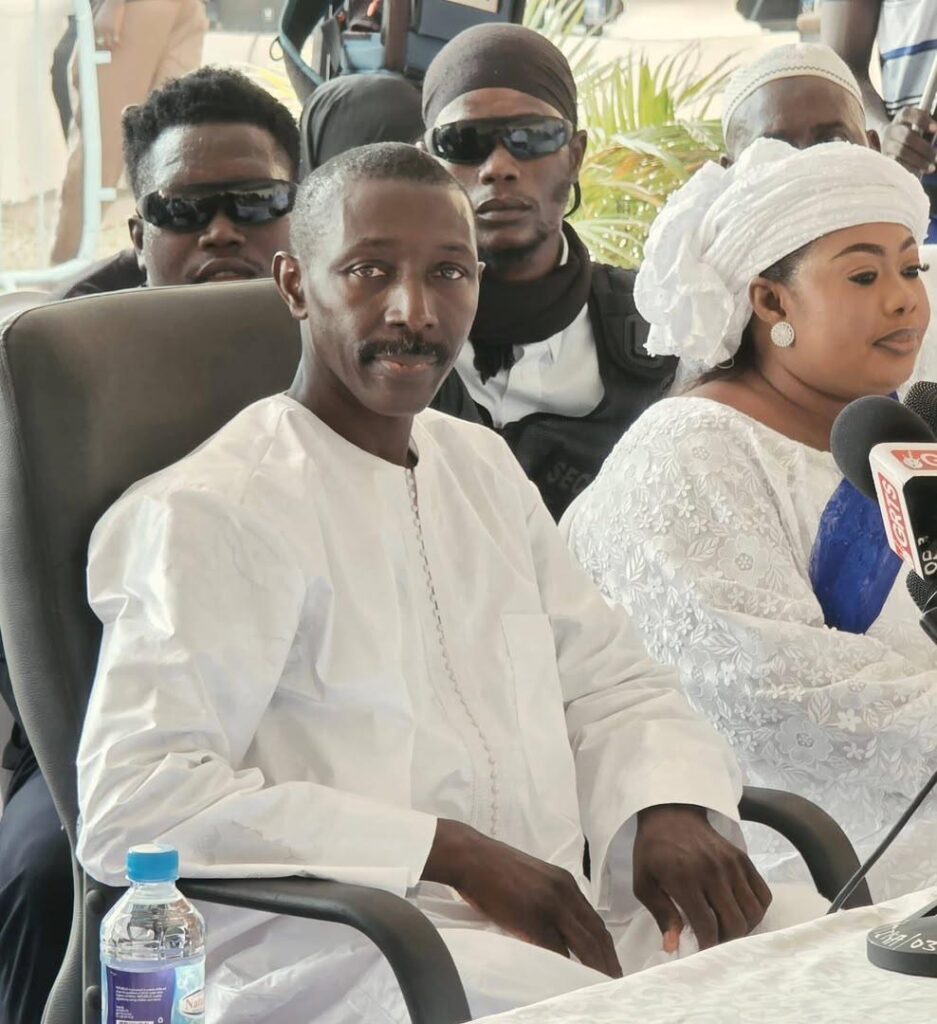
Ebrima Tabora Manneh, leader and secretary-general of the People’s Alliance Party (PAP), has criticised President Adama Barrow’s government, saying it is taking The Gambia in the wrong direction and leaving the country behind other African nations.
Manneh made the remarks while speaking to journalists after his nomination at the Independent Electoral Commission (IEC). He questioned the country’s development under the Barrow administration.
He argued that The Gambia, despite having a population of fewer than three million, has struggled to make meaningful progress and is falling behind other African countries.
“The reason why I am into politics is very, very simple. We know the current government is taking us nowhere. The Gambia is definitely a backward country compared with other African nations—not even European countries,” Manneh said.
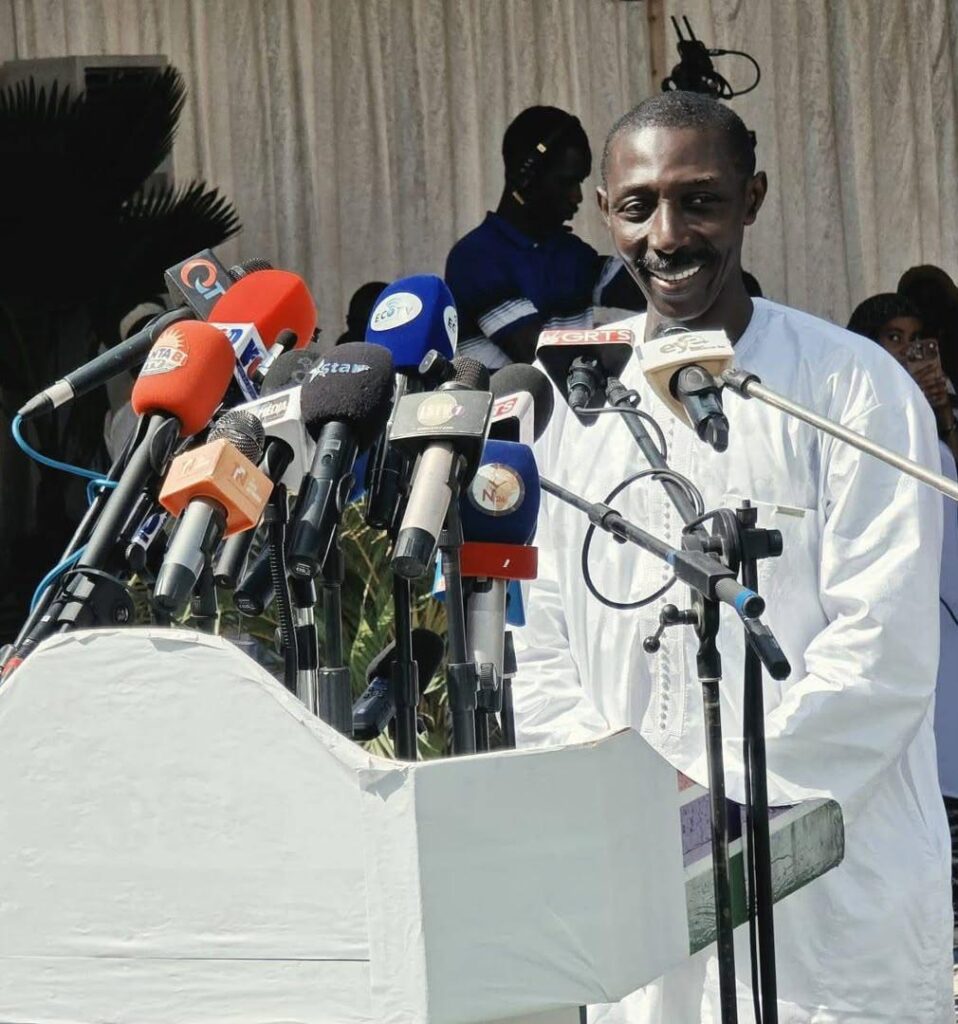
The Barra born said the country still had a long way to go and that the government’s development priorities had strayed from the path needed to make The Gambia prosperous.
“We have a long way to go, and we know the bus has veered off the path we should be taking to make this country a very good country,” he added.
Manneh also questioned why The Gambia, with fewer than three million people, had not achieved the level of development he believes should be possible given its size and population.
“This country should be the easiest country to develop,” he said.
Compares The Gambia to Rwanda and Singapore
To support his argument, PAP leader compared The Gambia with Rwanda and Singapore, asking why the country continues to face development challenges while others have made significant progress.
He pointed to Rwanda’s history of genocide and Singapore’s economic transformation as examples of countries that have faced difficult circumstances but followed different development paths.
He pointed to Singapore’s transformation into a destination for foreign workers, contrasting it with The Gambia, where many young people continue to risk their lives on dangerous irregular migration journeys known as the “Backway” in search of better opportunities abroad.
According to him it was troubling that some countries had created opportunities attractive enough to draw workers from overseas, while Gambian youths were putting their lives at risk to find opportunities elsewhere.
Says Key Sectors Have Failed
Manneh also criticised the performance of vital public services, saying the government’s shortcomings could be seen across several areas of national development.
He named healthcare, education, employment and security as sectors that, in his view, were not meeting Gambians’ needs and expectations.
“Any sector you look at in this country is a failure, whether it’s the health sector, education, employment, security, etc.,” he remarked.
Says His Commitment to Politics Is Driven by Patriotism
Manneh said his decision to enter politics was driven by patriotism and a desire to see The Gambia become one of Africa’s leading countries.
He described himself as a proud Gambian and said his children were born and raised in the country. Even after spending some time abroad, he said, his connection to The Gambia remained strong.
“The reason why I am into politics is that I am a citizen, a proud one for that matter. I have my children born and raised in this country. The Gambia means more to me than anywhere in the world,” he compared.
Manneh said he had spent 13 years in the United States and had also travelled to parts of Canada and Europe. Still, he said The Gambia remained his preferred home, and he hoped to see it become the best country in Africa.
Dismisses Claims That PAP Endorsed the NPP
Manneh dismissed claims that the People’s Alliance Party (PAP), had endorsed President Barrow’s ruling National People’s Party (NPP) or any other political contender.
He called the reports inaccurate, saying PAP remained independent and had not declared support for any party or candidate.
“Unfortunately, you said we endorsed the NPP. That’s erroneous. We haven’t endorsed the ruling party or any contestant. We have kept ourselves, and we haven’t endorsed anyone,” he clarified.
PAP Better Prepared for the Electoral Process
Reflecting on PAP’s preparations and its previous dealings with the Independent Electoral Commission, Manneh said the party was now better equipped to meet the electoral requirements.
He recalled that when he previously sought to contest the presidential election, PAP had not yet been registered. As a result, he ran as an independent candidate, but his nomination was rejected because he did not meet certain requirements under the Electoral Act.
“Last year, we went for nomination. Fortunately, the party was not registered, so I went as an independent candidate. We were rejected based on some of the requirements we lacked. I think we now have a wealth of experience. We went through a lot of processes, and this is not the first time. That’s why we came better prepared.”
The economist cum politician said the earlier experience had given the party a clearer understanding of what was required, adding that PAP believed it had now taken the necessary steps.
“We have done the right thing, and we have faith in the system, the IEC. We also have faith in the personnel of the Independent Electoral Commission. We have our ups and downs sometimes, which is normal,” he added.
Background
The People’s Alliance Party was officially registered as a political party in The Gambia on November 7, 2022, under Section 105 of the Electoral Act 2009, as amended.
The registration was announced by Alhagi Alieu Mamar Njai, who was then Chairman of the Independent Electoral Commission.
In a statement, the IEC said: “People’s Alliance Party (PAP) had been registered as a political party in The Gambia on 7 November 2022 under Section 105 of the Electoral Act 2009, as amended.”
Manneh had previously submitted his credentials to contest the 2021 presidential election, but the IEC rejected his nomination because he had not met certain requirements under the Electoral Act.
His latest nomination is another bid to take part in the country’s electoral process. He said he was confident that the lessons learned from past challenges had better prepared PAP for the process.