By: Ousman A. Marong
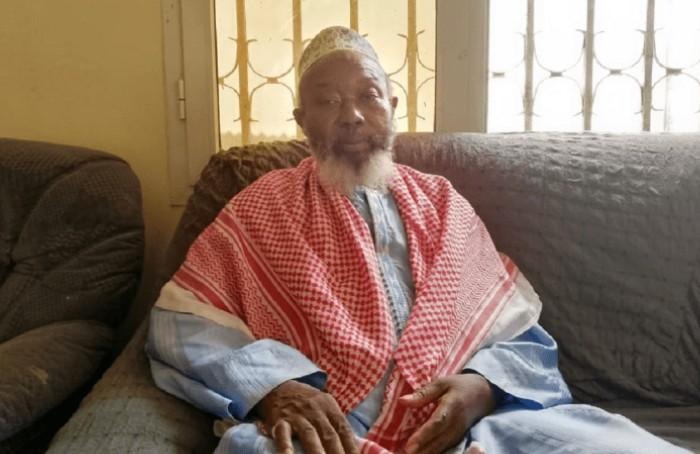
A prominent Islamic scholar, public figure and former State House Imam, Imam Abdoulie Fatty, has come out in defense of his choice to publicly criticize government actions. He believes that it’s the duty of Islamic scholars to openly advised leaders when they see wrongdoing.
During a Friday sermon on October 9, 2026, at Masjid Al-Furqan, the Dibba-Kunda family mosque in Bundung, Imam Fatty brushed off the backlash from his critics. He questioned the credibility of some of his opponents and encouraged Muslims to adhere to the teachings of the Qur’an and the Sunnah of the holy Prophet Muhammad (peace be upon him).
He asserted that differing opinions about his sermons wouldn’t stop him from addressing issues he feels impact the nation and its citizens.
‘Their Words Don’t Bother Me at All’
In response to those who criticize his public remarks, Imam Fatty pointed out that many of his detractors don’t fully grasp the context of his past sermons or the reasons he began discussing national matters.
He suggested that some critics might be too young to recall his earlier contributions or had been away from the country during significant changes in government.
The former State House Imam claimed that some of those now criticizing him had engaged in serious misconduct during the presidency of Yahya Jammeh. He further alleged that these individuals had played a role in the challenges currently facing the country and President Adama Barrow’s administration.
Using an analogy, he compared a child born during the rainy season to someone unfamiliar with the sound of gunfire, explaining that those lacking historical context might misinterpret events due to their ignorance of their origins.
He argued that many of his critics were similarly unaware of his statements during the Jammeh era, which left them without the necessary context to understand his current positions.
Imam Fatty urged his supporters to stay focused and not let the criticism sway them, emphasizing that it wouldn’t change his stance.
“Their chatter doesn’t budge me at all. I know they will keep talking and trying to sway me, but I’m not stepping back or abandoning the path I’ve chosen,” he stated.
He encouraged Muslims to concentrate on their religious teachings instead of getting caught up in disputes with his detractors.
Defends Advising the President from the Pulpit
A key point of his sermon revolved around the debate on whether Islamic scholars should publicly advise or criticize political leaders during Friday sermons.
Imam Fatty took issue with the view held by some in the ‘Salafi’ tradition that scholars shouldn’t use the pulpit to comment on the president’s actions.
He argued that the way to advise a leader should depend on whether the wrongdoing was public or private.
Citing the late Saudi scholar Sheikh Abdulaziz Ibn Baz, Imam Fatty explained that if a leader’s misdeeds are visible to all, they deserve public condemnation, while private matters should be handled privately.
He pointed to the Gambian government’s stance on female genital mutilation (FGM) as an example of an issue that warranted public criticism.
According to Imam Fatty, when a leader acts publicly, scholars should feel free to respond publicly instead of staying silent.
“The president put himself out there in public, so we (the scholars), will address him publicly too,” he clarified.
He also mentioned that if the issue were private, scholars would approach the president in a more discreet manner.
“If he does something wrong behind closed doors, we will reach out to him privately to advise him. But if it’s out in the open, we will also speak out in the open,” Imam Fatty concluded, presenting this approach as aligned with Islamic principles.
He framed this distinction as being in line with his understanding of the ‘Salafi’ tradition, rather than a departure from it.
Warns Against Silence in the Face of Poor Governance
Imam Fatty cautioned that an interpretation of Islamic teachings that discourages scholars from publicly addressing government actions could leave citizens without a vital religious voice in public matters.
He emphasized that staying silent when scholars see wrongdoing could enable leaders to operate without proper accountability.
“If misunderstanding the teachings of the ‘Salaf’ means we remain under a poor governance system without speaking truth to power, then we risk letting hypocrites lead us while good people choose silence,” he stated.
The Imam also took issue with what he called the promotion or acceptance of prostitution and ‘ribah’ — a term often linked to usury or interest, which is forbidden in Islamic teachings. He warned against Muslims profiting from money they consider religiously impermissible.
He connected these issues to his broader point that religious leaders have a duty to speak out against actions they believe contradict Islamic principles.
His comments positioned public religious guidance not merely as a conflict between scholars and politicians, but as a matter of moral duty and the role of Islamic leadership in society.
Cites the Prophet’s Leadership and the Companions
To bolster his argument, Imam Fatty referenced the leadership of Prophet Muhammad (peace be upon him) and the actions of his companions after the Prophet’s passing.
He contended that the Prophet’s religious mission included leadership responsibilities and that the early Muslim community understood the significance of choosing leaders to steer society.
He recalled that when Prophet Muhammad migrated to Medina, he took on a leadership role, blending his religious mission with the governance of the community.
Imam Fatty also referred to the events following the Prophet’s death, when prominent companions, including Abu Bakr al-Siddiq, Umar ibn al-Khattab and Uthman ibn Affan, were involved in the question of leadership and succession.
He used these historical examples to challenge the suggestion that Islamic scholars should refrain from leadership-related matters.
“Who is there to lead the Muslims if scholars are made to believe that they should neither lead nor advise the president?” he asked.
He warned that discouraging religious scholars from engaging in public affairs could leave governance to people whose actions might conflict with Islamic values, while those committed to religious and moral principles remain on the sidelines.
Calls on Muslims to Uphold Islamic Teachings
Imam Fatty concluded his remarks by urging Muslims to remain committed to the Qur’an and the Sunnah of Prophet Muhammad (peace be upon him), while maintaining that scholars must be free to advise leaders when they believe the circumstances demand it.
His sermon underscored his conviction that religious guidance and public accountability should not be treated as separate responsibilities.
For Imam Fatty, the distinction between public and private counsel is central to how scholars should engage with those in authority. He maintained that advising a leader privately is appropriate when wrongdoing occurs in private, but that public conduct can warrant a public response.
His remarks also reflected his determination to continue speaking despite criticism, presenting his interventions as part of what he regards as a religious duty rather than a pursuit of political approval.